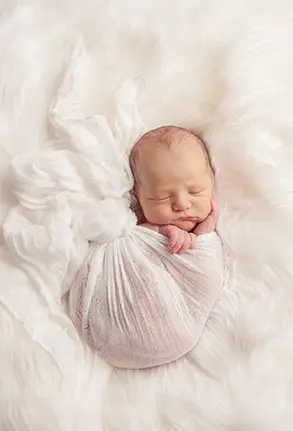
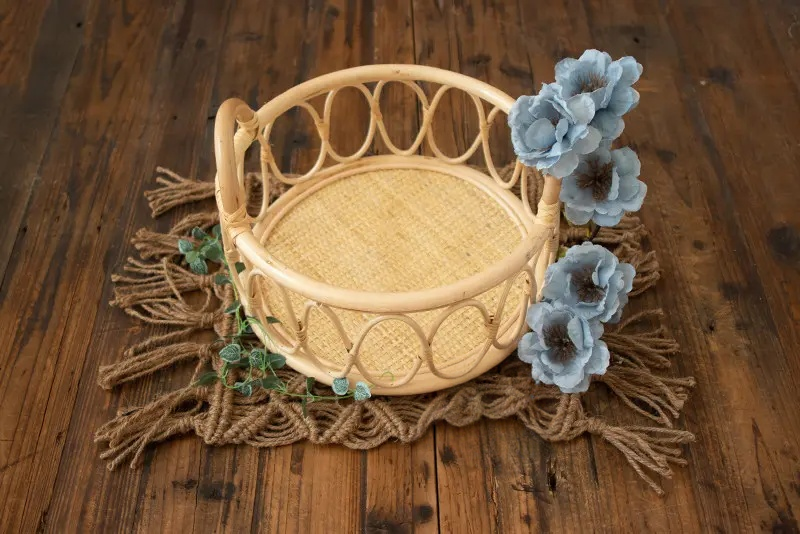
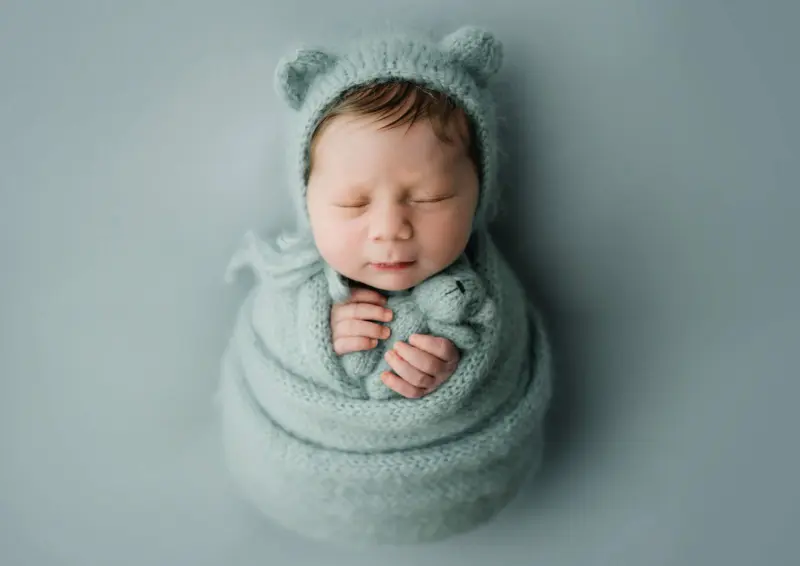
Timing also determines the best props for milestone sessions. Newborn wraps and low supported setups suit the earliest weeks, while tummy-time and sitter sessions need age-appropriate outfits, broad stable surfaces and enough room for an active spotter.
The calendar matters more than many parents expect.
A baby who is 8 days old and a baby who is 8 weeks old are not the same photography subject. One curls, sleeps, and fits inside two hands. The other stretches, looks around, and may want feeding every time the room gets quiet. Both can be beautiful, but they do not give the same photos.
So when should you do a baby photoshoot? The best time depends on what you want to remember: the tiny newborn stage, the first expressions, the sitting milestone, or the first birthday personality.
I make newborn photography props, so most photographers I work with talk about timing all the time. A few days can change the whole session flow.
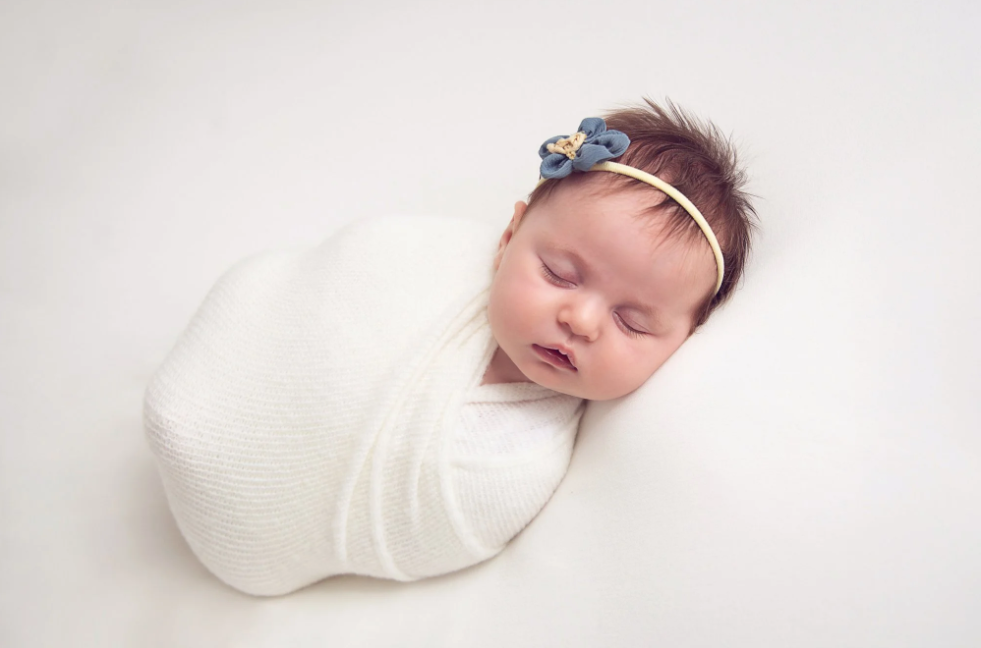
For Sleepy Newborn Photos: 5 to 14 Days
If you want the classic sleepy newborn look, many photographers prefer the 5-14 day window.
This is when many babies still curl naturally. They often settle more easily after feeding, and they are small enough for wrapped poses, parent hands portraits, baskets, beds, and simple newborn setups. The baby still has that new softness that changes very quickly.
This timing is especially good for:
- Wrapped newborn portraits
- Tiny hand and foot details
- Parent hands showing scale
- Soft basket or posing bed setups
- Calm sleeping images
But this window is not magic. A baby can be unsettled at 7 days. A baby can sleep well at 21 days. The age helps, but the photographer still needs patience, safe posing, clean props, and a baby-led workflow.
If you are booking a studio newborn photoshoot, try to contact the photographer before the baby arrives. Many parents book by due date, then confirm the exact session day after birth.
If You Missed the Newborn Window
Do not panic if your baby is already 3 or 4 weeks old.
You may not get the same tight curled poses, but you can still get meaningful baby photos. A later newborn session may include more wrapped images, awake portraits, parent holding photos, and close details. The baby may stretch more and sleep less, so the session should be simpler.
This is where expectations matter. If parents arrive hoping for 12 complicated sleepy poses at 5 weeks, everyone may feel stressed. If they arrive wanting connection, scale, and a calm record of the baby, the session can still be very good.
For later newborns, I would choose softer setups: one wrap, one neutral blanket, parent hands, and maybe one stable piece from newborn posing props. Keep the baby low, supported, and comfortable.
For safety basics, pair this with How to Pose Newborns Safely. Timing never matters more than the baby’s comfort.
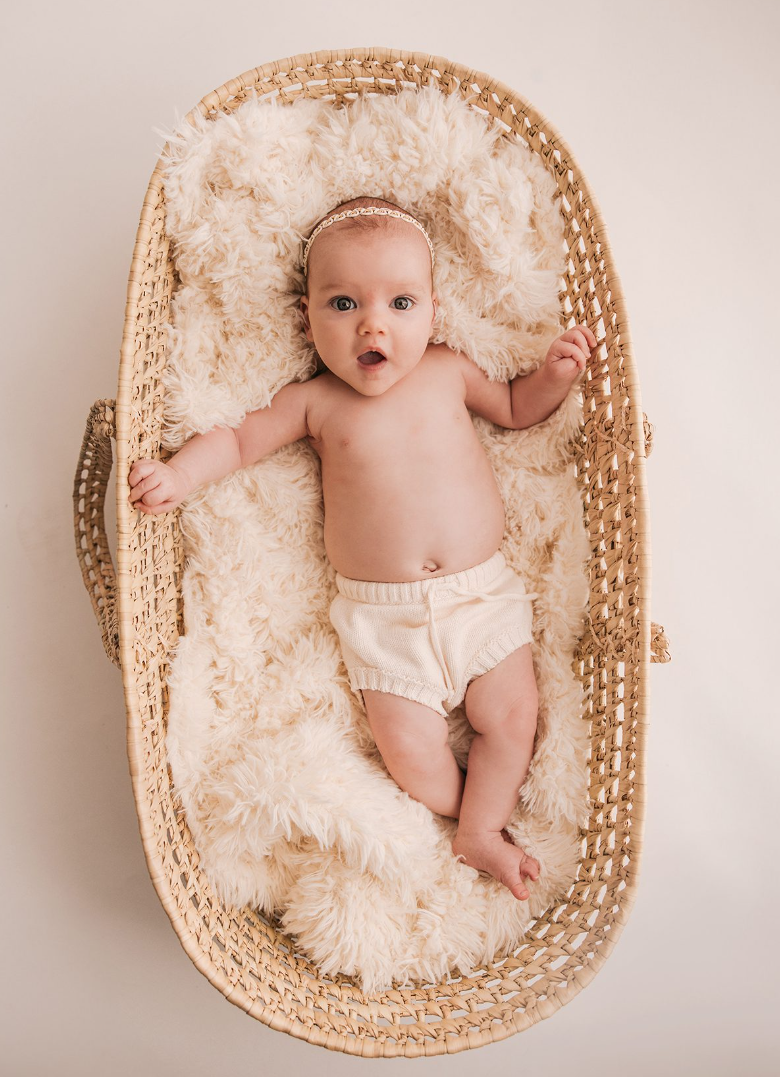
For More Eye Contact: 6 to 10 Weeks
Around 6-10 weeks, the photos start to feel different.
The baby may stay awake longer. Eye contact becomes stronger. Some babies give tiny expressions that feel very personal to the parents. The trade-off is that you usually lose the sleepy, curled newborn posing style.
This age works well if parents want:
- Awake baby portraits
- Parent-and-baby photos
- Simple home lifestyle images
- Soft blanket portraits
- Natural expressions
The session should be shorter and less pose-heavy. A 2-month-old may not want to be wrapped tightly like a newborn. The baby may prefer being held, placed on the back, or photographed near a parent.
For photographers, this is not the time to force newborn posing. Follow the baby’s movement and make the light beautiful.
For Tummy-Time Photos: Around 3 to 4 Months
The 3-4 month stage is good for families who want a little more personality.
Many babies can lift their head for a short time during tummy time. They may smile, follow faces, and show more expression. The photos feel less sleepy and more interactive.
This age is not always easy. Some babies only tolerate tummy time for a minute. Some get tired quickly. Plan in short bursts. Keep the surface soft and stable. Let parents stay close.
A 3-month baby photoshoot is lovely for:
- Tummy-time portraits
- Smiles and eye contact
- Parent interaction
- Close-up details
- Soft outfit photos
At this stage, props should be simple. A soft blanket, a small pillow used safely, or a clean outfit is enough. The baby’s face is doing more of the work now.
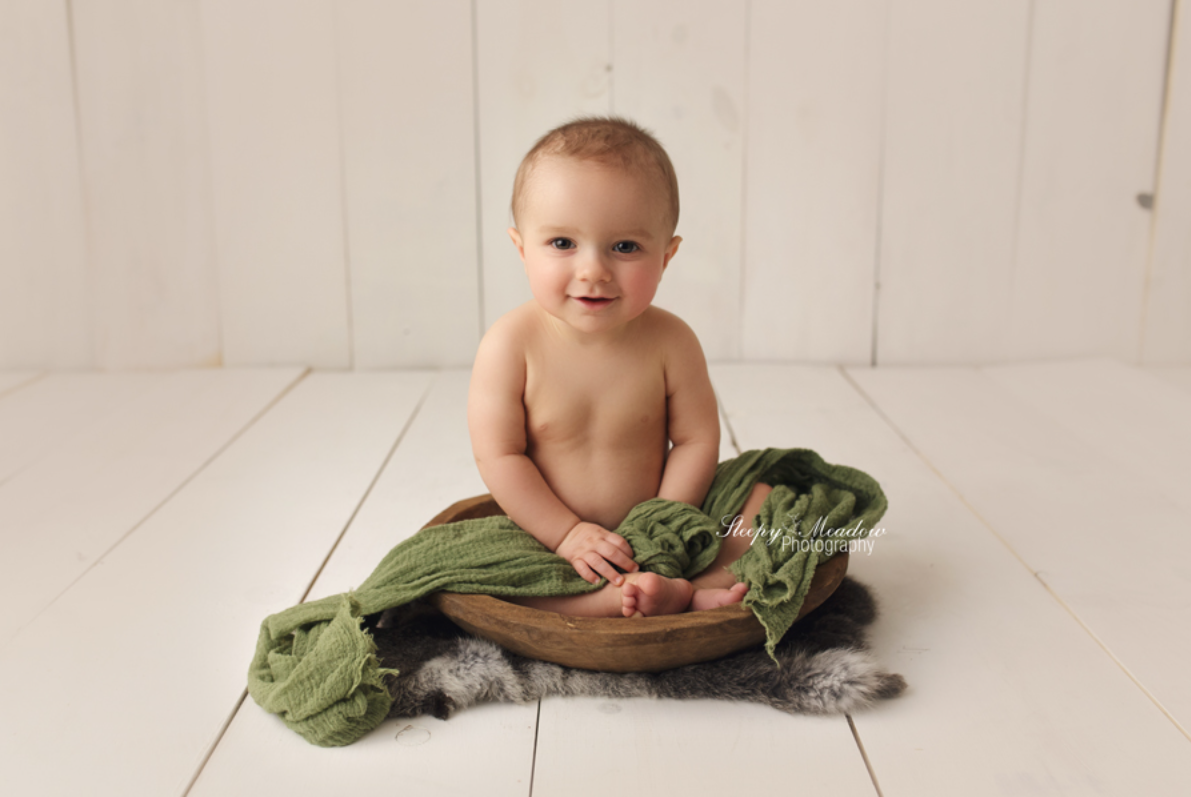
For Sitting Photos: 6 to 9 Months
The sitter stage is one of my favorite times for baby photos.
Usually this means around 6-9 months, when the baby can sit with confidence. Not every baby reaches this at the same age, so do not book only by month. Book when the baby can sit steadily without folding forward every few seconds.
Sitter photos have energy. Babies grab their toes, clap, laugh, chew everything, and look straight into the camera. Outfits and small theme sets can work well because the baby can show more personality.
The trade-off is safety again. A sitting baby can tip over fast. Keep an adult close, use a soft surface, and avoid hard props near the head. If a basket or small chair is used, it must be stable and watched carefully.
This age is also good for families who missed newborn photos and still want a special baby milestone session.
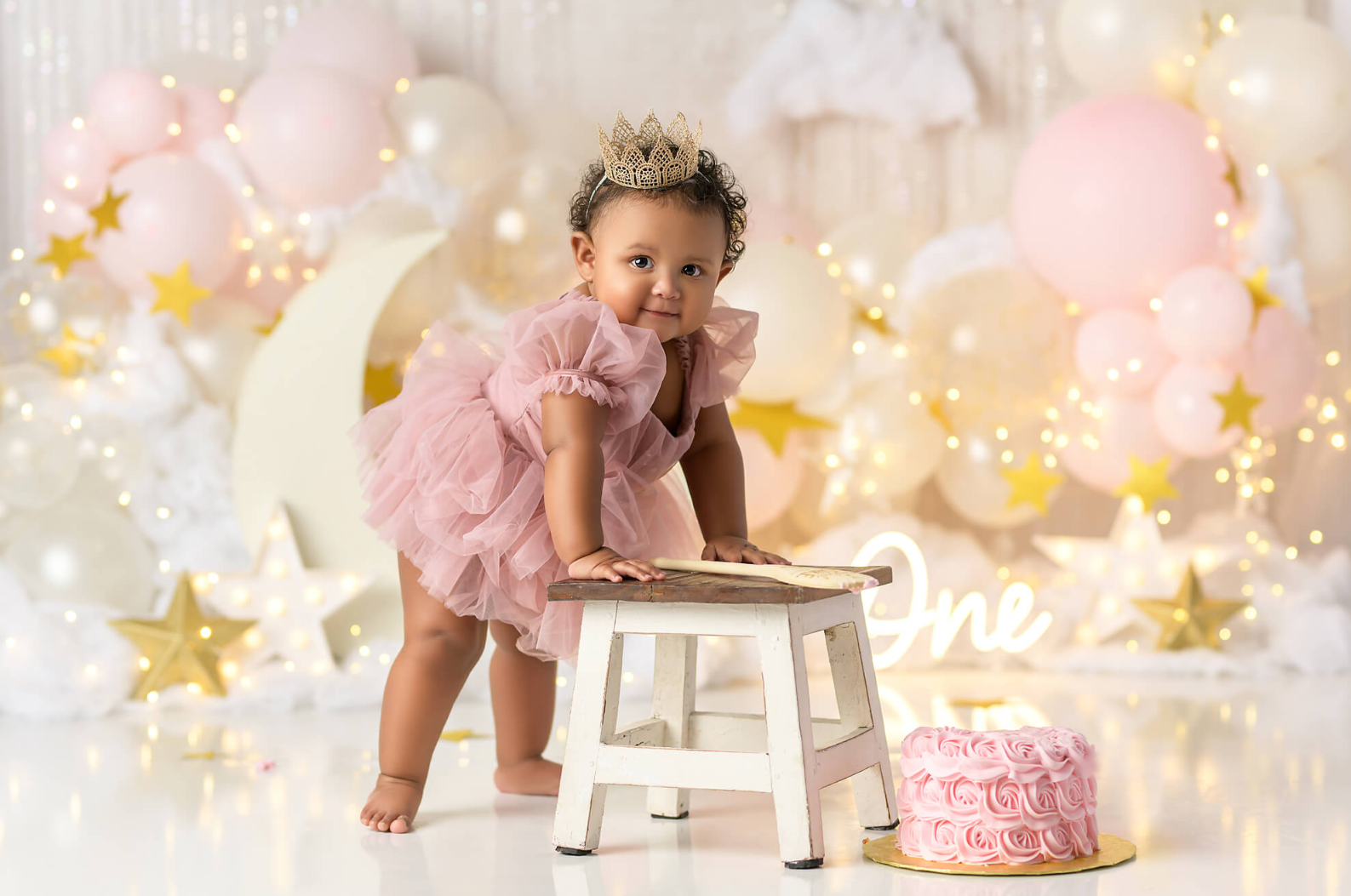
For First Birthday Photos: 11 to 13 Months
The first birthday photoshoot is less about tiny details and more about personality.
Some families do cake smash. Some prefer a clean portrait. Some want a theme that connects with the baby’s room, favorite color, or family story. Around 11-13 months, babies may stand with support, crawl fast, or walk away from the setup completely.
That means the session needs space and patience. Keep decorations secure. Keep small objects away from the mouth. Choose clothes that allow movement.
If you want the photos before the birthday party, book the session 3-4 weeks before the birthday. That gives the photographer time to edit and gives parents time to print images for invitations or party display.
What If You Can Only Do One Baby Photoshoot?
If you can only choose one session, choose based on what you care about most.
Choose 5-14 days if you want the tiny newborn stage: curled body, sleepy face, parent hands, and the beginning of the story.
Choose 3-4 months if you want eye contact, early smiles, and a baby who feels more awake in the photos.
Choose 6-9 months if you want personality, sitting portraits, and a gallery that feels playful.
Choose 1 year if you want a clear milestone and a bigger expression of who your baby is becoming.
My personal choice would be newborn first, if the budget and recovery time allow it. Not because later photos are less important, but because newborn size cannot be recreated. You can photograph smiles later. You cannot photograph that first-week curl later.
If you are still deciding whether newborn photos are worth booking at all, I wrote about the cost and value here: Newborn Photos: Are they worth it?.
A Simple Booking Timeline
For newborn photos, contact photographers during pregnancy, often in the second or third trimester. Book around the due date, then set the final date after birth.
For 3-month, sitter, or birthday photos, book 4-8 weeks ahead if the photographer is busy. If you need prints or party images, leave extra time.
For photographers planning props, timing changes what you need. Newborn sessions use more newborn wraps and blankets, posing pillows, baskets, and low stable props. Sitter and birthday sessions need outfits, safe seating, and decorations that can handle movement.
The Best Time Is the Time That Matches the Baby
The best baby photoshoot timing is not only an age on a calendar.
It is the time when the parents are ready, the baby is safe, and the photographer’s plan matches the stage. A sleepy newborn session should move slowly. A 3-month session should allow breaks. A sitter session should expect movement. A birthday session should expect mess and personality.
Do not chase a photo style that no longer fits the baby. Choose the stage you are in, then photograph it honestly.
That is usually when the photos feel best.