Safe newborn posing is not about getting a perfect pose faster. It is about building a calm workflow where the baby stays supported, comfortable, warm, and watched at every moment.
This guide is written for newborn photographers who want a practical safety framework before choosing poses, wraps, bowls, baskets, or theme sets. It is not medical advice, and it does not replace hands-on newborn safety training. When a baby seems uncomfortable, unsettled, cold, too warm, or difficult to position, the safest choice is always to stop and simplify.
The Core Rule of Safe Newborn Posing
Every newborn pose should follow one rule: the image must be built around the baby, not the other way around.
That means:
- The baby’s airway stays open and visible.
- The head, neck, and body are supported.
- The baby is never left unattended.
- Props are stable before the baby is placed near them.
- Advanced-looking poses are created as composites, not by balancing the baby.
Professional newborn photography should feel slow, quiet, and responsive. If a pose requires force, pressure, balancing, or a baby holding up their own head, it is not a safe pose.
Safety Checks Before the Session Starts
Before you bring the baby into the setup, prepare the room and check the full posing area.
1. Room Temperature and Comfort
Newborns cannot regulate temperature the way adults can. A warm studio helps them settle, but overheating is also a risk.
Use a comfortable warm room, monitor the baby often, and avoid placing heaters close to the baby or pointed directly at them. Keep wraps, blankets, and layers breathable. If the baby looks flushed, sweaty, mottled, or unusually unsettled, pause the session and cool the setup down.
2. Clean Hands, Clean Props, Clean Surfaces
Wash or sanitize hands before handling the baby. Launder wraps, blankets, hats, and outfits between sessions. Wipe hard props such as buckets, bowls, small beds, and posing plates before use.
Soft surfaces should be fresh for each client. Keep backup wraps nearby so you can swap quickly if anything gets wet or dirty.
3. Stable Base First
Do not style a prop around the baby after the baby is already in place. Build and test the base first.
Check:
- The prop does not wobble.
- The floor is level.
- Weighted support is hidden but secure.
- No hard edge touches the baby.
- The baby cannot roll toward an open edge.
If you would not trust the setup without your hands nearby, do not use it.
Airway Safety: What to Watch Every Time
Airway safety is the most important part of newborn posing.
During every pose, check that:
- The baby’s chin is not pressed tightly into the chest.
- The nose and mouth are fully clear.
- The neck is not twisted.
- The face is not pressed into fabric.
- The chest can rise and fall naturally.
- Wraps and blankets do not cover the mouth or nose.
Side poses, tummy poses, and wrapped poses all require extra attention because fabric, hands, or prop edges can accidentally crowd the face. Keep the face visible and keep a spotter within arm’s reach.
Beginner-Friendly Newborn Poses
If you are still building experience, start with simple poses that keep the baby low, supported, and easy to monitor.
1. Back Pose
The back pose is one of the safest starting points. The baby lies on a soft, flat surface with the head gently turned to one side.
Use it for:
- Sleeping portraits
- Tiny hands and feet
- Parent hand detail shots
- Simple wrap portraits
Safety notes:
- Keep the surface soft but stable.
- Avoid loose fabric near the face.
- Do not place heavy props on or near the baby.
2. Side-Lying Pose
The side-lying pose gives a natural curled look without forcing the baby into a difficult shape.
Use a posing pillow or folded support behind the baby so they cannot roll backward. Keep the lower arm and shoulder comfortable, and avoid pressing the chin down.
This pose works beautifully with newborn wraps and blankets because a wrap can add shape without adding risk.
3. Wrapped Pose
A wrapped pose is often the easiest way to calm a newborn while keeping the body supported.
Safe wrapping should feel snug, not tight. The wrap should support the baby’s body without restricting breathing, pressing on the neck, or covering the face.
4. Parent Hands Pose
Parent hands are one of the safest and most emotional ways to photograph a newborn. The baby stays supported by an adult while you capture scale, connection, and detail.
Guide parents slowly. Show them where to place hands, remind them not to squeeze, and keep the baby’s face visible.
Poses That Should Be Composites
Some popular newborn poses look like the baby is balancing or holding up their head. In a safe workflow, those images are created with multiple supported frames and edited together.
Composite-only poses include:
- Froggy pose
- Upright wrapped poses
- Head-in-hands poses
- Any pose where the head appears unsupported
- Any pose where the baby appears suspended, balanced, or elevated
In each frame, an adult hand should support the baby. The support is removed later in editing. The baby should never be balanced for the camera.
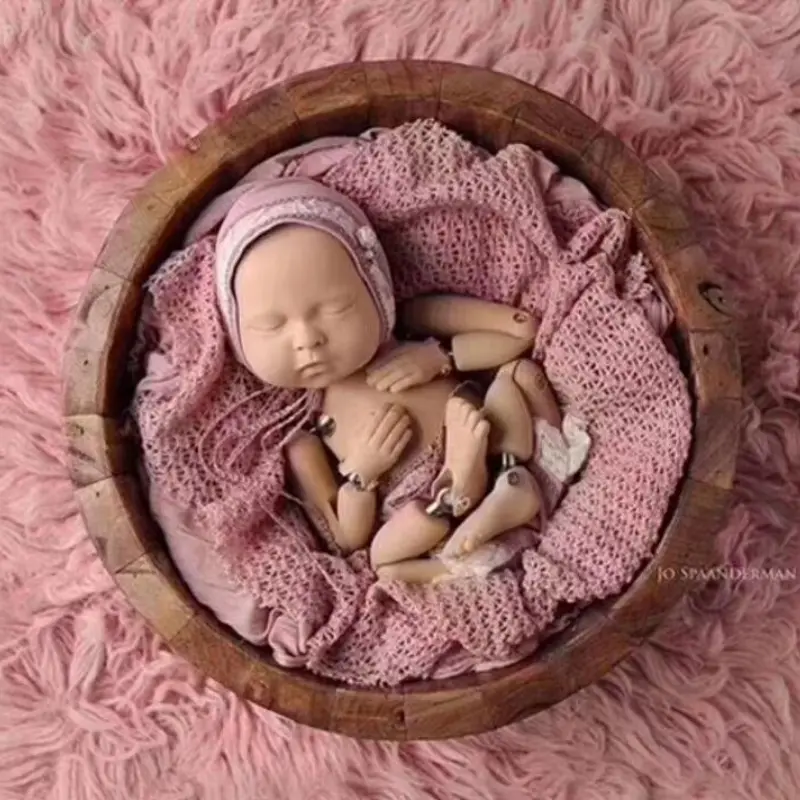
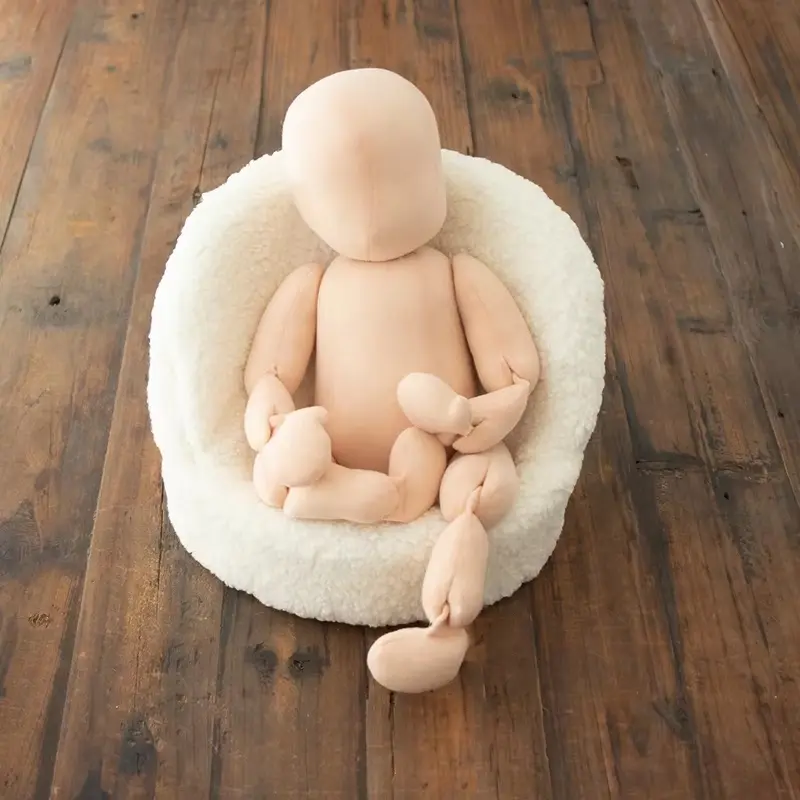
Before attempting composite newborn poses with a real baby, practice the hand positions with a newborn photographer training doll. A training doll helps you learn setup flow, camera angles, and support points without rushing during a live session.
Safe Prop Setup for Newborn Photography
Props can add story and polish, but they should never make the pose less stable.
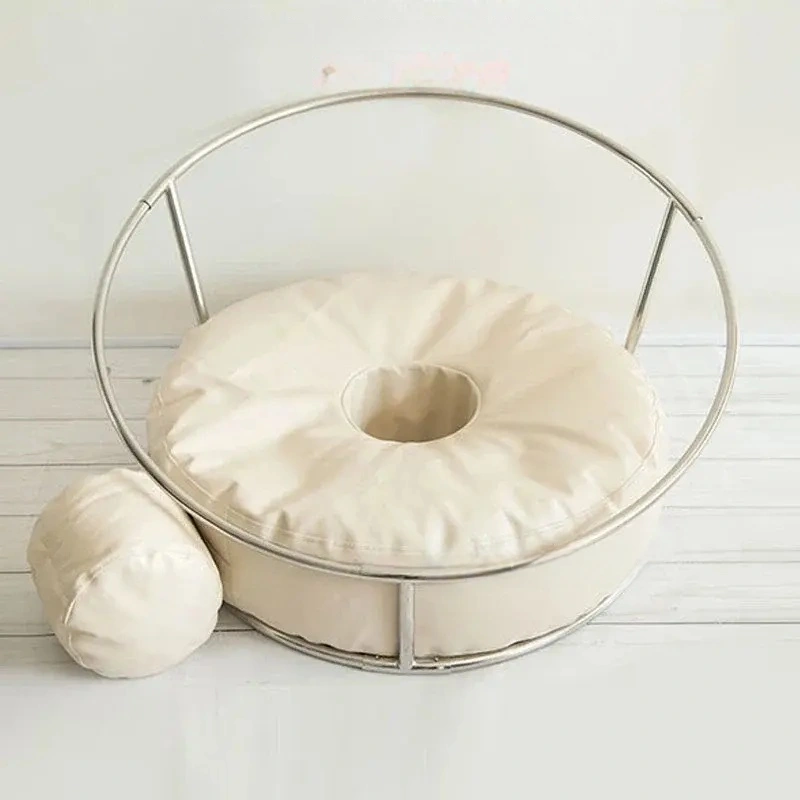
Beanbags and Posing Cushions
A beanbag or posing stage is best for low, supported poses. Shape the support before placing the baby. Use small posing pillows under blankets when needed, but keep the final surface smooth and stable.
Bowls, Buckets, and Beds
Use only props that are wide, sturdy, and weighted if necessary. Never place a baby in a tall or narrow prop without support. If a prop can tip, slide, or rotate, it is not ready.
Browse newborn posing props with stability in mind: rounded edges, broad bases, and enough room for padding matter more than decoration.
Theme Sets and Decorative Props
Theme sets are excellent for storytelling, but small decorative pieces should stay around the baby, not on the baby. Keep florals, toys, letters, sports props, and seasonal decorations away from the mouth, nose, and hands if the baby may grab or turn.
A Safe Newborn Posing Workflow
Use this sequence for every setup:
- Build the set without the baby.
- Test every prop for wobble and sharp edges.
- Add clean padding and a soft top layer.
- Place the baby with both hands supporting head and body.
- Check airway, temperature, and facial color.
- Take the first simple frame before adjusting.
- Make only small changes between shots.
- Stop if the baby resists, startles repeatedly, or seems uncomfortable.
Small adjustments are safer than big resets. Move slowly, keep your voice calm, and let the baby lead the session.
Common Newborn Posing Mistakes
Mistake 1: Chasing a Pose the Baby Resists
Some babies do not like being curled, wrapped, or placed on their tummy. That is normal. Forcing a pose increases stress and risk.
Fix: switch to a wrapped back pose or parent hands pose.
Mistake 2: Using Too Many Layers
Too many blankets and wraps can hide the baby’s shape, trap heat, and crowd the face.
Fix: use one support layer and one visible styling layer. Keep the face open.
Mistake 3: Styling Props After the Baby Is Placed
Reaching around a baby to adjust baskets, stands, signs, or decorations creates unnecessary risk.
Fix: complete the scene first. Bring the baby in only when the setup is stable.
Mistake 4: Treating Online Poses as Literal Setups
Many polished newborn images are composites. Trying to recreate them in one frame can be unsafe.
Fix: assume advanced poses need support and editing unless you have been trained otherwise.
Pre-Session Safety Checklist
Before each newborn session, review this checklist:
- Room is warm but not hot.
- Hands and surfaces are clean.
- All wraps and outfits are freshly laundered.
- Props are stable, padded, and inspected.
- No loose decorations are near the baby’s mouth or nose.
- A spotter is ready for any elevated, side, tummy, or prop pose.
- Composite poses are planned as supported frames.
- Parents know you will stop or simplify if the baby resists.
FAQ: Safe Newborn Posing
What is the safest newborn pose for beginners?
The safest starting pose is usually a supported back pose on a soft, stable surface. It keeps the baby’s airway visible and allows easy monitoring.
Are tummy poses safe for newborn photography?
Tummy poses require training, constant supervision, and careful airway checks. Beginners should avoid complex tummy poses and use simpler side or back poses until they have hands-on safety education.
Can newborns hold their own head during posing?
No. Newborns cannot safely support their own head for photography poses. Any image that appears to show this should be created with adult support and composite editing.
Should photographers use props for newborn photos?
Yes, but only stable, padded, baby-safe props. A prop should support the scene, not create instability. If a prop wobbles or has hard edges near the baby, do not use it.
What should I do if a baby will not settle into a pose?
Stop and simplify. Try a wrapped pose, parent hands, feeding break, or a neutral back pose. No single photo is worth pushing past the baby’s comfort.
Final Thought
The best newborn photographers are not the ones who can force the most difficult pose. They are the ones who know when to slow down, support the baby better, simplify the setup, and choose safety over a trend.
Build your workflow around calm support, visible breathing, stable props, and gentle transitions. Beautiful newborn portraits come from trust first.
For prop ideas that support safe, simple setups, browse our newborn photography props or start with newborn wraps and blankets for beginner-friendly session styling.